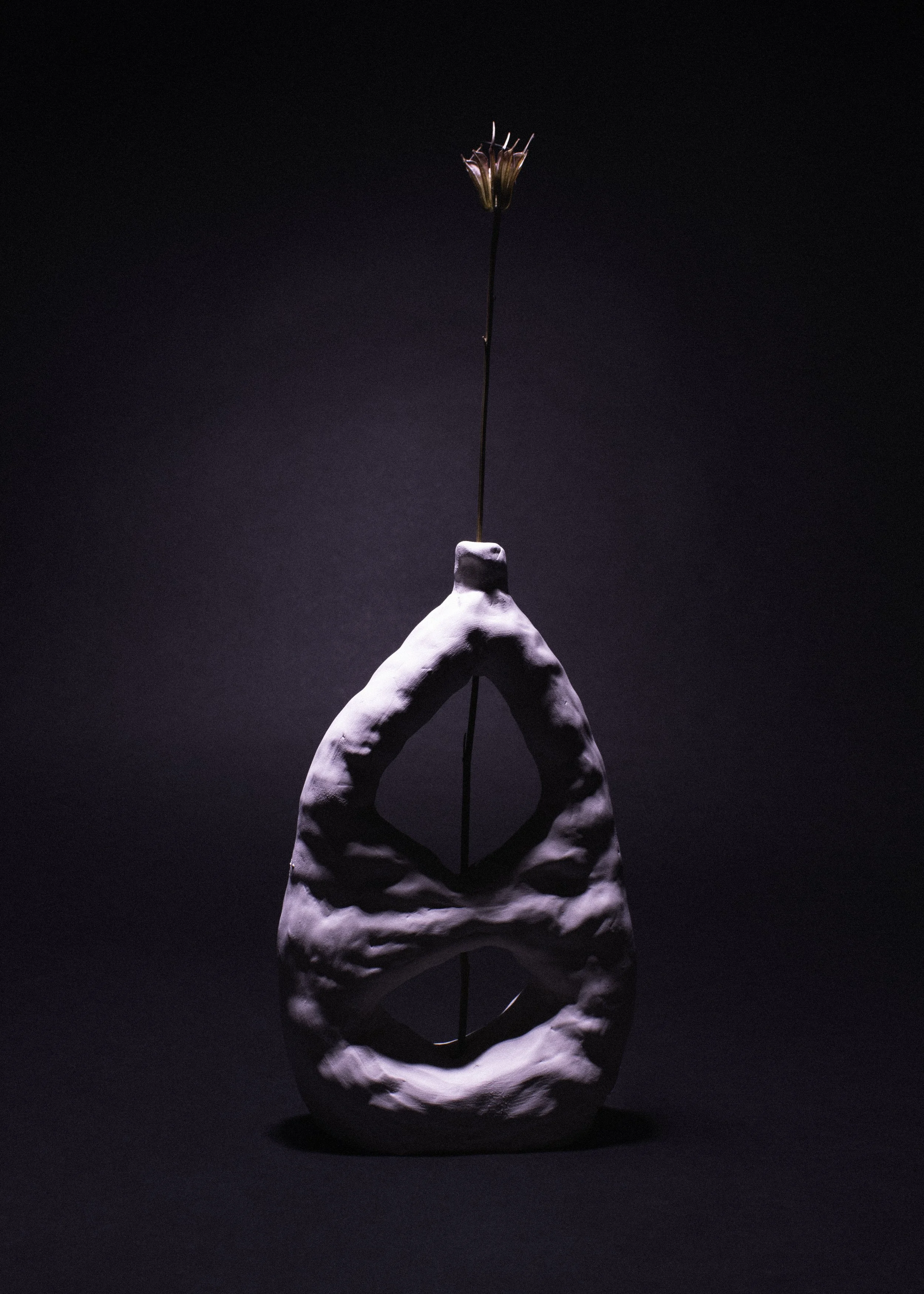
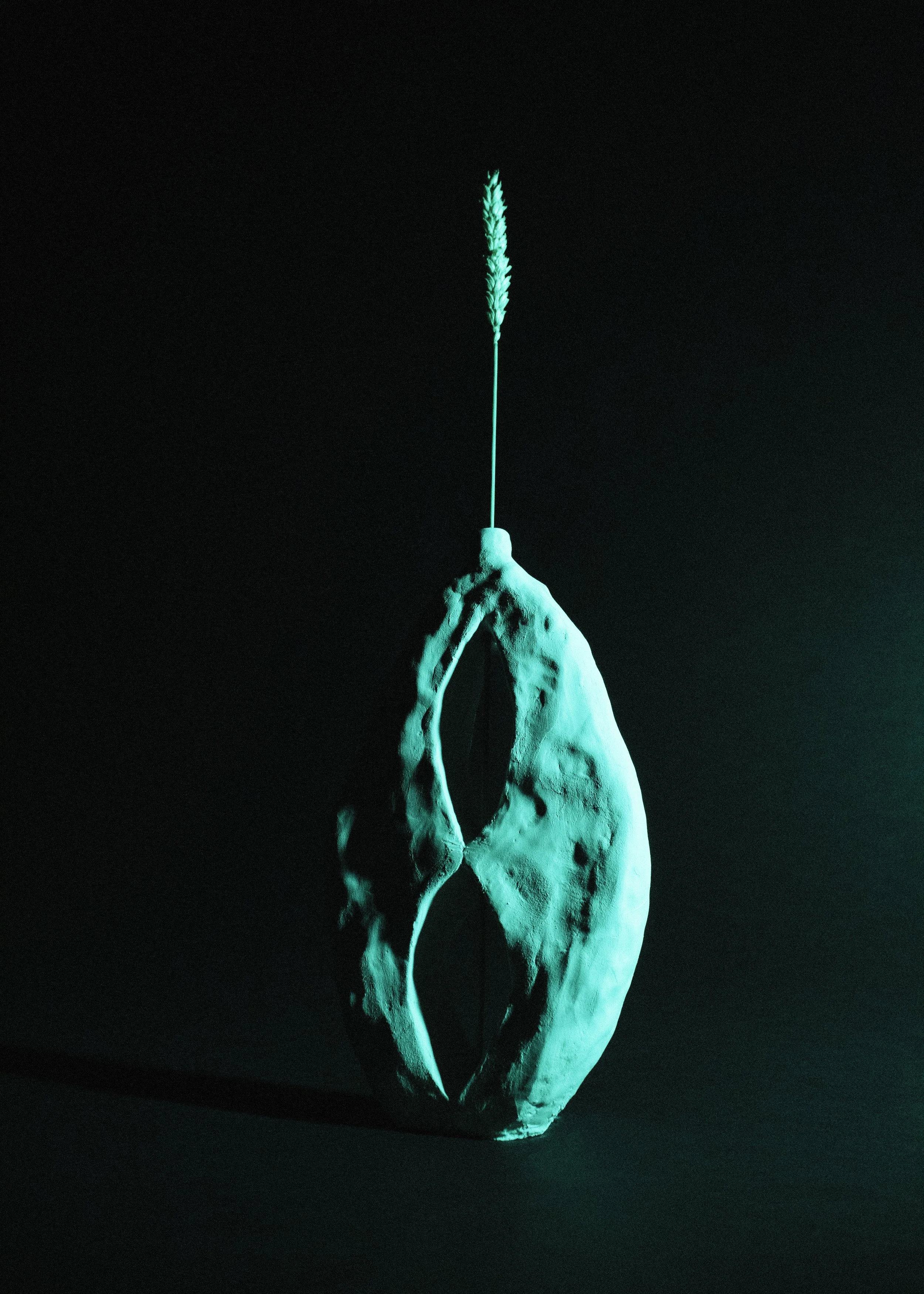
Isolated beauty is a project that holds a particularly personal place in my practice.
It began after a long period of artistic burnout,
when the desire to create had grown quiet.
Then, unexpectedly, I was given access to a ceramic studio,
despite knowing almost nothing about the medium.
Not knowing became part of the process.
There was no previous knowledge to measure myself against,
no familiar language to fall back on,
only the material in front of me
and the freedom of beginning again.
With a childlike curiosity and an open approach,
I began to explore.
Slowly, something shifted.
It felt as though the machinery in my mind
had started turning again.
As though a floodgate had opened
and ideas began to move freely,
bringing with them the impulse to make.
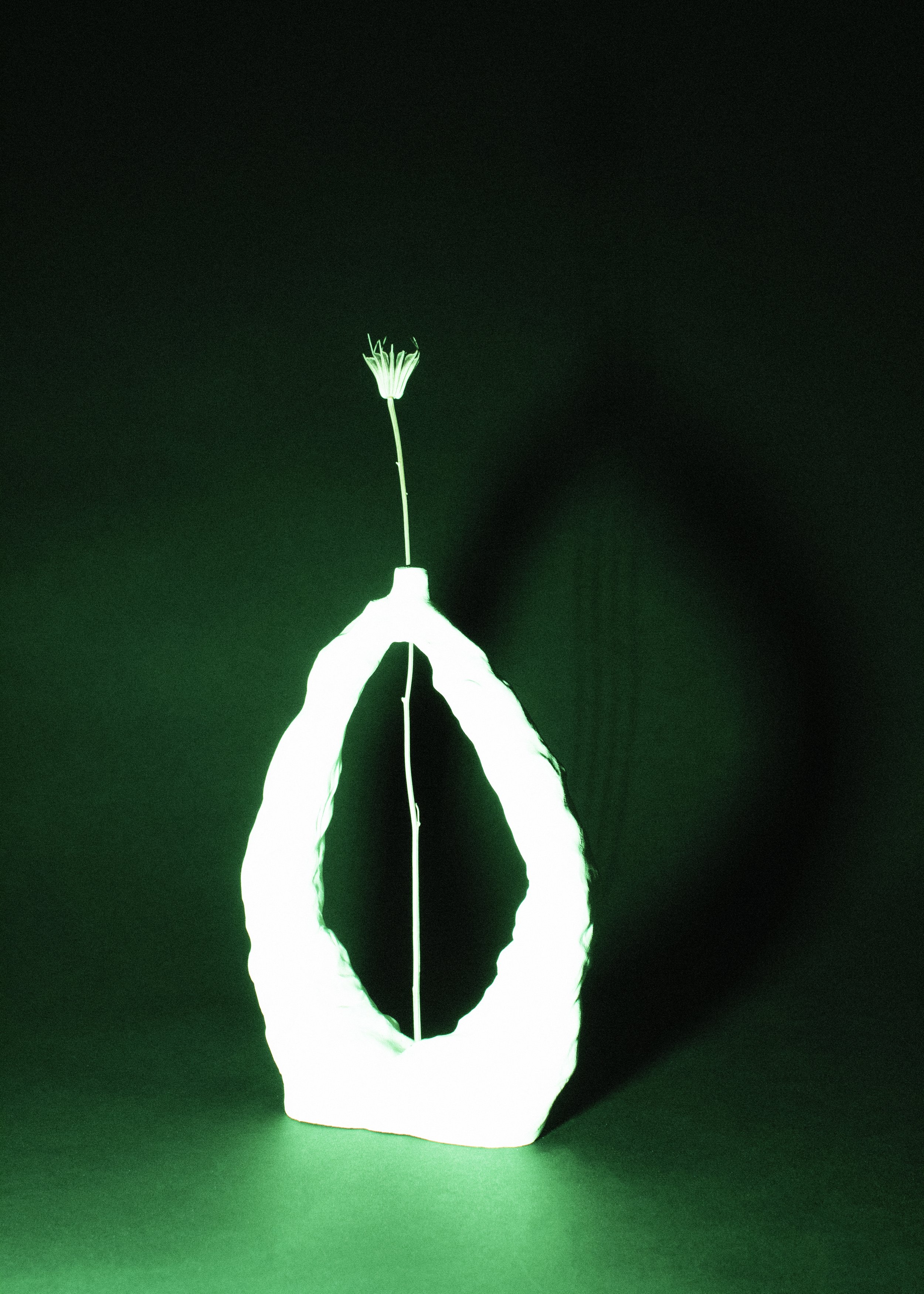
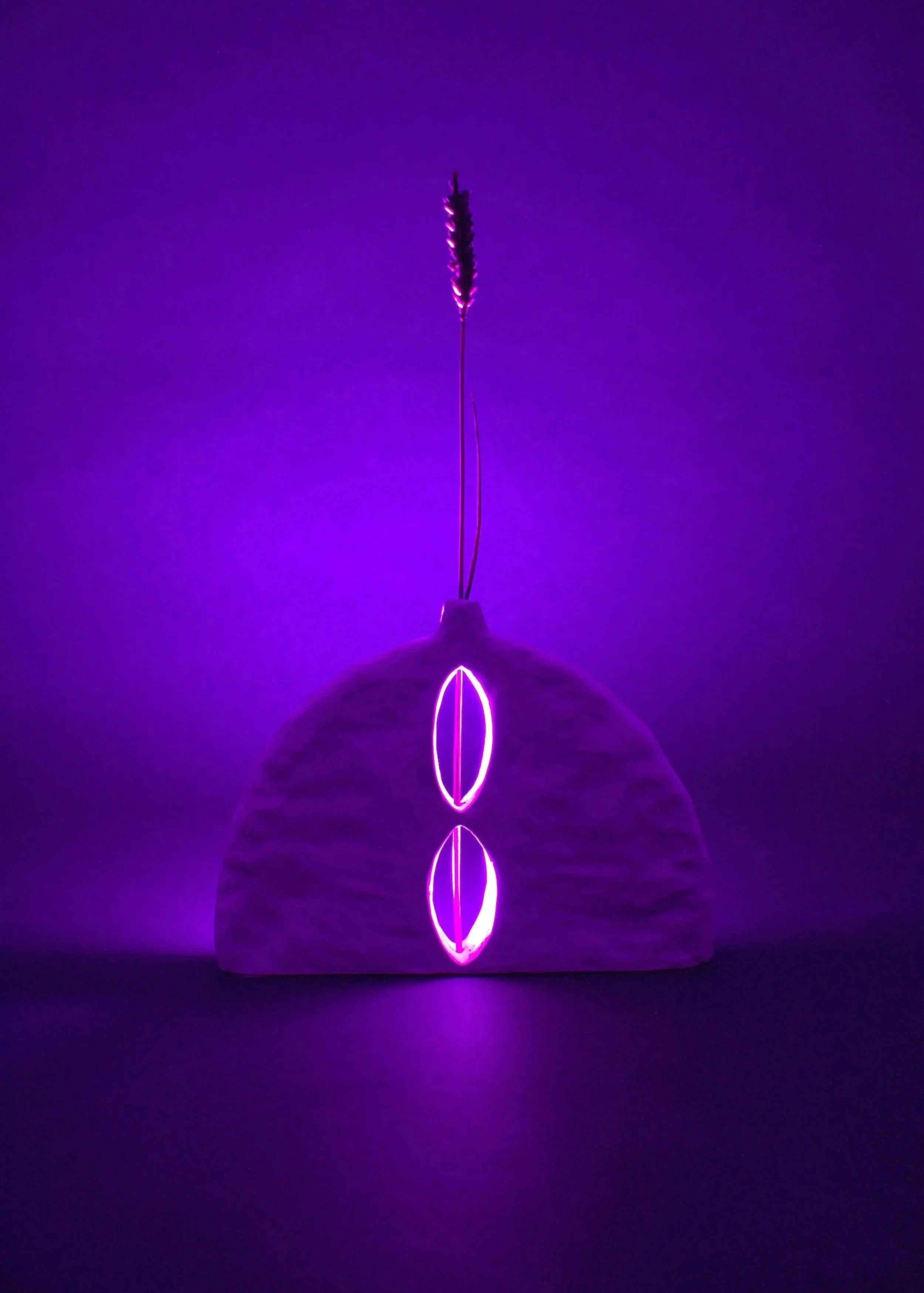
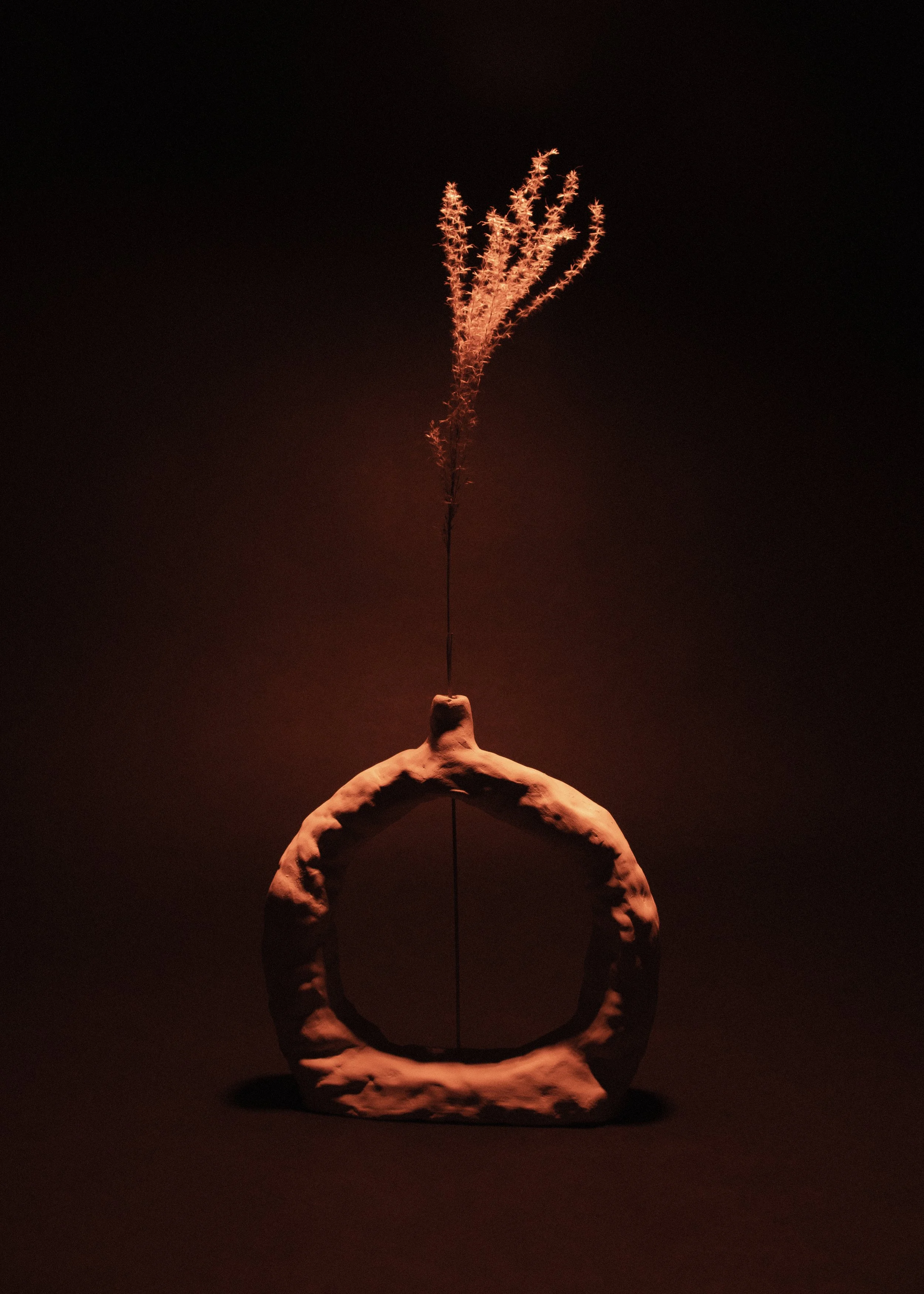
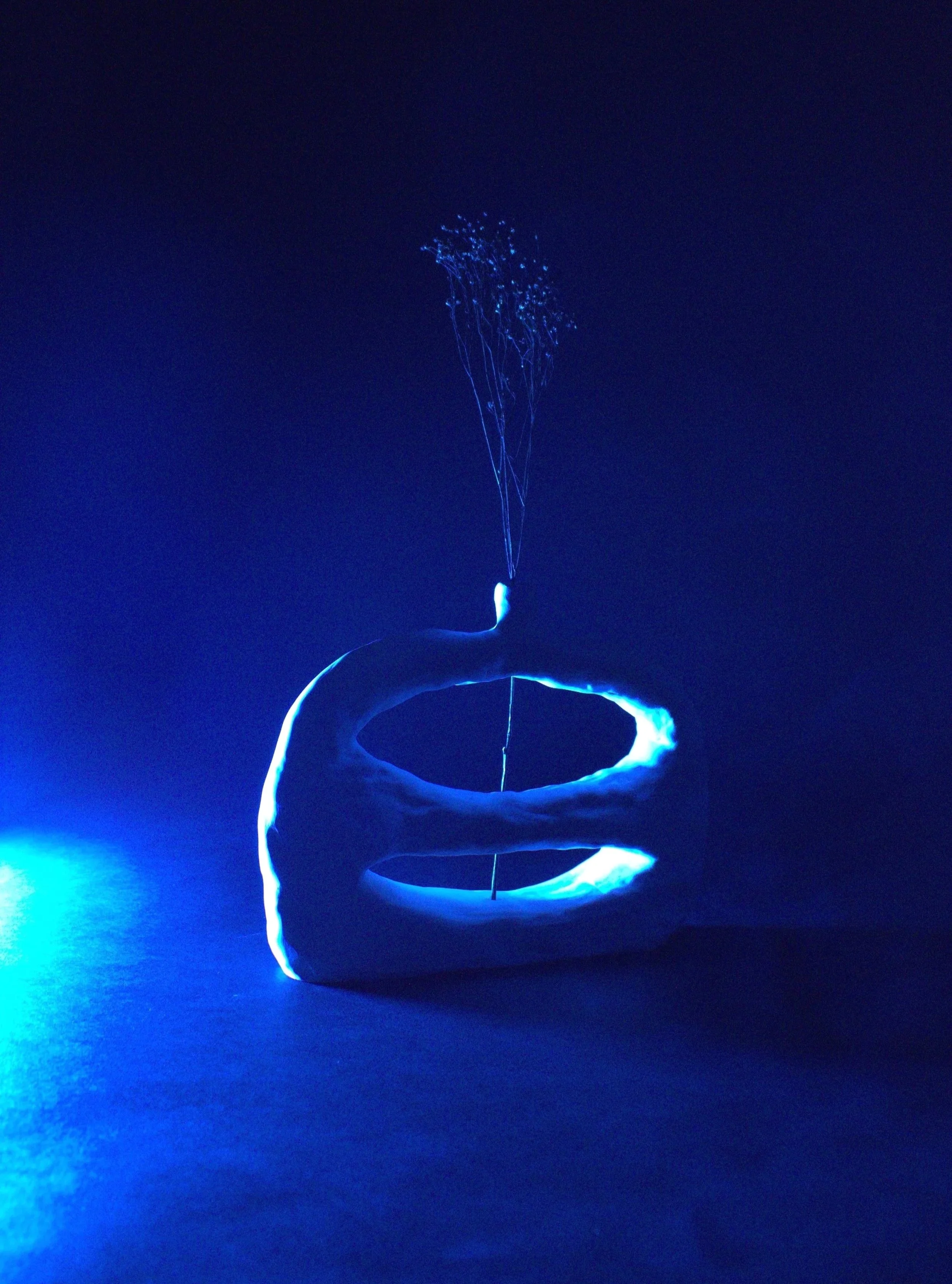
One of these ideas became Isolated beauty,
a series of ceramic sculptures designed
for a single blade of grass.
The sculpture becomes a frame.
It isolates the grass from everything around it
and draws attention to what might otherwise disappear
within a field of many.
The entire object is placed upon a pedestal,
elevating something ordinary
into something worthy of attention.
The relationship between the grass and the sculpture
is built through contrast:
the vast difference in scale,
the asymmetry and abstraction of the ceramic forms
against the quiet symmetry of the grass.
Neither exists alone.
The sculpture gives the grass a stage,
while the grass gives the sculpture its purpose.
The sculptures were selected for exhibition
at DesignMarch in Reykjavík in 2022.
It was only later, after some distance from the work,
that I began to understand what I had really been making.
While creating these sculptures to lift a single blade of grass
out of the sea of other blades,
I was unknowingly doing the same for myself.
I had spent months feeling lost among other artists,
other practices, other ideas
measuring myself against everything around me.
And here I was, creating a space
where one small thing could be seen on its own.
Not because it was better.
Not because it was more beautiful.
Simply because it had been given the space to be noticed.
No blade of grass is more worthy than another.
Each is part of the same field,
yet each carries its own shape, its own imperfections,
its own quiet beauty.
Perhaps beauty does not always ask to be compared.
Perhaps it only asks to be seen.
Einangruð fegurð became a reflection on attention,
individuality, and the act of giving something space to exist.
To isolate is not always to separate.
Sometimes, it is to finally see.